This is an interesting essay by John Yohe comparing James Dickey's views of nature with those of another poet and contemporary of his, Gary Snyder. There are some factual errors in the brief biography of Dickey (he was a navigator and radio operator during World War II, not a "radar technician," and he didn't start teaching at Florida until 1954 -- that sort of thing). But the basic problem with Yohe's take is that he sees Dickey as threatened by nature and by such animals as the wolverine when in fact the key to his work was the ecstatic transformation of the poet/writer into the animals themselves. If there is something "threatening" about the beasts it is not the way they are in nature, but the way they exist inside of us. That is also part of what makes the animals -- and the poems -- so fascinating.
Having said that, it's worth noting that Dickey always liked to cite Aldous Huxley's essay "Wordsworth in the Tropics," about which see this interesting post of an interview with Peter Gilbert in Vermont: http://www.vpr.net/episode/44532/
Readers might also be amused by this post on the Dickey Scrapbook, which is a companion blog to this one: http://dickeyscrapbook.blogspot.com/2009/09/goodbye-to-serpents.html
In any case, for anyone interested in these subjects, Yohe's essay is worth a read:
Gary Snyder and James Dickey were born only seven years apart, and both went on to become famous poets from the 1960’s through to the 1990’s. They are both known as "nature" poets (Snyder more than Dickey), but each has a distinctive view of nature, as well as a distinctive poetic style. I was intrigued by the fact that both of their views on nature seemed to be true, or correct. I want to examine both the similarities and differences between these views, with the intention of finding out whether one view is "more true", or better, than the other.... http://tinyurl.com/yfovrqe
Thursday, December 24, 2009


Monday, December 21, 2009
James Dickey and Typewriters

 The L.C. Smith on which Dickey wrote Deliverance
Photographs (c) Christopher Dickey
A James Dickey quote many a writer will relate to, picked up by Scott Myers on his blog "Go Into The Story":
On writing
"Any time I get a little money that I can spend on myself,I buy another typewriter and put it in another room and
start another project. It could be a novel, it could be
a poem I'm working on, it could be a translation,
it could be an essay, a literary criticism, it could be
a children's book, it could be a film script and it could be
whatever it is I'm interested in doing at the time.
And in a strange way the different projects kind of
cross-pollinate one another. It's very odd. Almost a
mystical process. You see something in one typewriter
that would be better off in another typewriter."
– James Dickey
------
Sunday, December 20, 2009
Top Posts for 2009 on Valparaiso Poetry Review Blog
Edward Byrne's terrific essay on "The Last Lecture" of James Dickey in Number 4:
1. Inaugural Poem by Elizabeth Alexander
2. Elizabeth Alexander Comments on Her Inaugural Poem
3. John Ashbery, Pierre Martory, and Jackson Pollock
4. James Dickey’s Last Lecture: What It Means to Be a Poet
5. Rating Great Poets and Considering Contemporary Concerns
6. Sylvia Plath and Nicholas Hughes: Mother and Son
7. John Updike and John Cheever
8. John Ashbery Presentation at NBCC Ceremony
9. Craig Arnold, “Scrubbing Mussels,” and David Wojahn
10. W.S. Merwin Wins Pulitzer Prize in Poetry
This is the top of Ed's post:
James Dickey was born on this date (February 2) in 1923. Dickey’s reputation as a contemporary poet rose quickly to the highest levels in the early 1960s with publication of his first three volumes of poetry—Into the Stone (1960), Drowning with Others (1962), and Helmets (1964). About that third collection, Richard Howard later declared Dickey “as the telluric maker Wallace Stevens had called for in prophesying that the great poems of heaven and hell have been written and the great poem of the earth remains to be written (Alone with America: Atheneum, 1969).
However, in 1965 James Dickey produced Buckdancer’s Choice, winner of the National Book Award and one of the great collections of poetry of its time. In fact, this book, too often overlooked by recent readers of poetry, contains some of the more original and compelling poems to contribute to the body of contemporary American literature. Indeed, Dave Smith speaks of Dickey’s first decade of poetry in his book of criticism, Local Assays: On Contemporary American Poetry (University of Illinois Press, 1985), that it is “often as good as American poetry has gotten.”
In one of the three chapters concerning James Dickey in Unassigned Frequencies, Laurence Lieberman’s 1977 book of criticism on contemporary poetry, Lieberman describes the persona he finds in Dickey’s poems as “a unique human personality. He is a worldly mystic. On the one hand, a joyous, expansive personality—all candor, laughter, and charm—in love with his fully conscious gestures, the grace and surety of moves of his body. An outgoing man. An extrovert. On the other hand, a chosen man. A man who has been picked by some mysterious, intelligent agent in the universe to act out a secret destiny.”
Lieberman considers the major poems in Buckdancer’s Choice—such as “The Firebombing,” “The Fiend,” and “Slave Quarters”—as works in which “the conflict between the worldly-mindedness of modern life and the inner life of the spirit is dramatized.” Regarding Dickey’s fifth collection of poems, Falling (included in Poems 1957-1967), and its amazing title piece, Lieberman admires the poet’s “joy that’s incapable of self-pity or self-defeat. There is a profound inwardness in the poems, the inner self always celebrating its strange joy in solitude, or pouring outward, overflowing into the world. No matter how much suffering the poet envisions, the sensibility that informs and animates him is joy in the sheer pleasure of being.”
Anyone who met James Dickey may have encountered the poet’s “sheer pleasure of being.” His presence was felt whenever he entered a room, and his forceful personality certainly evoked various reactions, positive and negative, from those whom he engaged with his thoughts on poems, poets, poetics, and sometimes politics. In a chapter titled “James Dickey’s Motions” from Hunting Men: Reflections on a Life in American Poetry (LSU Press, 2006), Dave Smith explains that “Dickey cunningly and rightly counted on notoriety to carry his poetry to an audience usually indifferent to academic poems.” Additionally, his eagerness and ability to attract attention often led to instances of friction, controversy, and confrontation with a few fellow poets and critics, including an ongoing public feud with Robert Bly, especially during his difficult later years, much of which is chronicled in Henry Hart’s informative biography of Dickey, James Dickey: The World as a Lie (Picador, 2000) and Christopher Dickey’s more intimate and further insightful book about his father, Summer of Deliverance: A Memoir of Father and Son (Simon & Schuster, 1998). ... http://edwardbyrne.blogspot.com/2009/02/james-dickeys-last-lecture-what-it.html
This video clip, which Ed put on his site accompanying the post is interesting, but it is not nearly as strong as the audio from the last class. If there is enough interest from the public, I will post that here, too:
1. Inaugural Poem by Elizabeth Alexander
2. Elizabeth Alexander Comments on Her Inaugural Poem
3. John Ashbery, Pierre Martory, and Jackson Pollock
4. James Dickey’s Last Lecture: What It Means to Be a Poet
5. Rating Great Poets and Considering Contemporary Concerns
6. Sylvia Plath and Nicholas Hughes: Mother and Son
7. John Updike and John Cheever
8. John Ashbery Presentation at NBCC Ceremony
9. Craig Arnold, “Scrubbing Mussels,” and David Wojahn
10. W.S. Merwin Wins Pulitzer Prize in Poetry
This is the top of Ed's post:
“ . . . this will almost undoubtedly be my last class forever.”
James Dickey was born on this date (February 2) in 1923. Dickey’s reputation as a contemporary poet rose quickly to the highest levels in the early 1960s with publication of his first three volumes of poetry—Into the Stone (1960), Drowning with Others (1962), and Helmets (1964). About that third collection, Richard Howard later declared Dickey “as the telluric maker Wallace Stevens had called for in prophesying that the great poems of heaven and hell have been written and the great poem of the earth remains to be written (Alone with America: Atheneum, 1969).
However, in 1965 James Dickey produced Buckdancer’s Choice, winner of the National Book Award and one of the great collections of poetry of its time. In fact, this book, too often overlooked by recent readers of poetry, contains some of the more original and compelling poems to contribute to the body of contemporary American literature. Indeed, Dave Smith speaks of Dickey’s first decade of poetry in his book of criticism, Local Assays: On Contemporary American Poetry (University of Illinois Press, 1985), that it is “often as good as American poetry has gotten.”
In one of the three chapters concerning James Dickey in Unassigned Frequencies, Laurence Lieberman’s 1977 book of criticism on contemporary poetry, Lieberman describes the persona he finds in Dickey’s poems as “a unique human personality. He is a worldly mystic. On the one hand, a joyous, expansive personality—all candor, laughter, and charm—in love with his fully conscious gestures, the grace and surety of moves of his body. An outgoing man. An extrovert. On the other hand, a chosen man. A man who has been picked by some mysterious, intelligent agent in the universe to act out a secret destiny.”
Lieberman considers the major poems in Buckdancer’s Choice—such as “The Firebombing,” “The Fiend,” and “Slave Quarters”—as works in which “the conflict between the worldly-mindedness of modern life and the inner life of the spirit is dramatized.” Regarding Dickey’s fifth collection of poems, Falling (included in Poems 1957-1967), and its amazing title piece, Lieberman admires the poet’s “joy that’s incapable of self-pity or self-defeat. There is a profound inwardness in the poems, the inner self always celebrating its strange joy in solitude, or pouring outward, overflowing into the world. No matter how much suffering the poet envisions, the sensibility that informs and animates him is joy in the sheer pleasure of being.”
Anyone who met James Dickey may have encountered the poet’s “sheer pleasure of being.” His presence was felt whenever he entered a room, and his forceful personality certainly evoked various reactions, positive and negative, from those whom he engaged with his thoughts on poems, poets, poetics, and sometimes politics. In a chapter titled “James Dickey’s Motions” from Hunting Men: Reflections on a Life in American Poetry (LSU Press, 2006), Dave Smith explains that “Dickey cunningly and rightly counted on notoriety to carry his poetry to an audience usually indifferent to academic poems.” Additionally, his eagerness and ability to attract attention often led to instances of friction, controversy, and confrontation with a few fellow poets and critics, including an ongoing public feud with Robert Bly, especially during his difficult later years, much of which is chronicled in Henry Hart’s informative biography of Dickey, James Dickey: The World as a Lie (Picador, 2000) and Christopher Dickey’s more intimate and further insightful book about his father, Summer of Deliverance: A Memoir of Father and Son (Simon & Schuster, 1998). ... http://edwardbyrne.blogspot.com/2009/02/james-dickeys-last-lecture-what-it.html
This video clip, which Ed put on his site accompanying the post is interesting, but it is not nearly as strong as the audio from the last class. If there is enough interest from the public, I will post that here, too:
Saturday, December 19, 2009
Another blogger discovers the novel "Deliverance"
"... I’ve finally read James Dickey’s (pause for juvenile snickers) classic.
Apparently the flick is the birthplace of the gay fan-base…
The book is an amazing look at American existentialism, before we truly embraced extreme everything.
I closed it with a feeling of loss building in me. We’ve become so desensitized that I’m not sure a man today could be made of stern enough stuff to be broken.... http://edgejammer.wordpress.com/2009/12/19/deliverance-not-a-gay-romp/
Apparently the flick is the birthplace of the gay fan-base…
The book is an amazing look at American existentialism, before we truly embraced extreme everything.
I closed it with a feeling of loss building in me. We’ve become so desensitized that I’m not sure a man today could be made of stern enough stuff to be broken.... http://edgejammer.wordpress.com/2009/12/19/deliverance-not-a-gay-romp/
Friday, December 18, 2009
SOLDIER TO POET: An Exchange

As the son of a poet and the father of a lieutenant colonel, I read this exchange with great interest and, should the subject of James Dickey come up again, I'd be curious to know the colonel's thoughts on "The Firebombin
Read the Article at HuffingtonPost
Wednesday, December 16, 2009
From a recent blog review of "Deliverance" ...
"I bought the book because I heard there was a pretty gnarly sodomy scene but there turned out to be a really good book on both sides of it....."
http://www.deckfight.com/2009/12/favorite-reads-in-2009.html
http://www.deckfight.com/2009/12/favorite-reads-in-2009.html
Wednesday, August 26, 2009
Edward Byrne's Top 100 Books of Poetry
Edward Byrne has posted his top 100 books of 20th century American poetry, in alphabetical order by author, on his excellent blog for the Valparaiso Poetry Review, "One Poet's Notes":
1. A.R. Ammons: Collected Poems 1951-1971 (1971)
2. Rae Armantrout: Veil: New and Selected Poems (2001)
3. John Ashbery: Selected Poems (1985)
4. John Berryman: Collected Poems 1937-1971 (1988)
5. Linda Bierds: Flight: New and Selected Poems (2008)
6. Elizabeth Bishop: The Complete Poems, 1929-1979 (1983)
7. Robert Bly: Selected Poems (1986)
8. Louise Bogan: The Blue Estuaries: Poems 1923-1968 (1968)
9. David Bottoms: Armored Hearts: Selected and New Poems (1995)
10. Gwendolyn Brooks: Selected Poems (1999)
11. Amy Clampett: The Collected Poems (1993)
12. Lucille Clifton: Blessing the Boats: New and Selected Poems, 1988-2000 (2000)
13. Billy Collins: Sailing Alone Around the Room: New and Selected Poems (2001)
14. Hart Crane: The Poems of Hart Crane (1986)
15. Robert Creeley: Selected Poems (1991)
16. E.E. Cummings: Complete Poems: 1913-1962 (1972)
17. J.V. Cunningham: The Poems of J.V. Cunningham (1997)
18. James Dickey: The Whole Motion: Collected Poems, 1945-1992 (1992)
19. Mark Doty: Atlantis (1995)
20. Rita Dove: Selected Poems (1993)
21. Robert Duncan: Selected Poems (1997)
22. Stephen Dunn: New & Selected Poems: 1974-1994 (1994)
23. Richard Eberhart: Collected Poems, 1930-1986 (1988)
24. T.S. Eliot: Complete Poems and Plays (1952)
25. B.H. Fairchild: The Art of the Lathe (1998)
26. Lawrence Ferlinghetti: These Are My Rivers: New and Selected Poems, 1955-1993 (1993)
27. Edward Field: New and Selected Poems from the Book of My Life (1987)
28. Carolyn Forché: The Country Between Us (1981)
29. Robert Frost: Complete Poems of Robert Frost (1968)
30. Alice Fulton: Cascade Experiment: Selected Poems (2005)
31. Allen Ginsberg: Collected Poems: 1947-85 (1995)
32. Louise Glück: The First Four Books of Poems (1995)
33. Jorie Graham: The Dream of the Unified Field: Selected Poems 1974-1994 (1995)
34. Barbara Guest: Selected Poems (1995)
35. R.S. Gwynn: No Word of Farewell: Poems 1970-2000 (2001)
36. H.D. [Hilda Doolittle]: Collected Poems, 1912-1944 (1983)
37. John Haines: The Owl in the Mask of the Dreamer: Collected Poems (1993)
38. Joy Harjo: How We Became Human: New and Selected Poems 1975-2001 (2002)
39. Robert Hass: Field Guide (1973)
40. Robert Hayden: Collected Poems (1985)
41. Anthony Hecht: Collected Earlier Poems (1992)
42. Richard Hugo: Making Certain It Goes On: The Collected Poems of Richard Hugo (1984)
43. Mark Jarman: Unholy Sonnets (2000)
44. Randall Jarrell: Complete Poems (1968)
45. Donald Justice: New and Selected Poems (1995)
46. Weldon Kees: The Collected Poems of Weldon Kees (1975)
47. Galway Kinnell: A New Selected Poems (2000)
48. Carolyn Kizer: Cool, Calm and Collected: Poems 1960-2000 (2001)
49. Etheridge Knight: Born of a Woman: New and Selected Poems (1980)
50. Yusef Komunyakaa: Pleasure Dome: New and Collected Poems (2001)
51. Maxin Kumin: Selected Poems 1960-1990 (1997)
52. Denise Levertov: Selected Poems (2002)
53. Philip Levine: New Selected Poems (1992)
54. Larry Levis: The Selected Levis (2000)
55. Vachel Lindsay: Selected Poems of Vachel Lindsay (1963)
56. Audre Lorde: The Collected Poems of Audre Lorde (1997)
57. Amy Lowell: Complete Poetical Works (1955)
58. Robert Lowell: Collected Poems (2002)
59. Edgar Lee Masters: Spoon River Anthology (1916)
60. Walter McDonald: Blessings the Body Gave (1998)
61. Claude McKay: Selected Poems (1953)
62. James Merrill: Collected Poems (2001)
63. Thomas Merton: The Collected Poems of Thomas Merton (1979)
64. W.S. Merwin: Selected Poems (1988)
65. Edna St. Vincent Millay: The Selected Poetry of Edna St. Vincent Millay (2001)
66. Marianne Moore: The Complete Poems of Marianne Moore (1981)
67. Howard Nemerov: Trying Conclusions: New and Selected Poems, 1961-1991 (1991)
68. Frank O’Hara: The Collected Poems of Frank O’Hara (1995)
69. Sharon Olds: Strike Sparks: Selected Poems (2004)
70. Mary Oliver: New and Selected Poems (1992)
71. Charles Olson: The Collected Poems of Charles Olson (1987)
72. Robert Pinsky: The Figured Wheel: New and Collected Poems 1966-1996 (1996)
73. Sylvia Plath: The Collected Poems (1981)
74. Ezra Pound: The Cantos of Ezra Pound (1996)
75. John Crowe Ransom: Selected Poems (1945)
76. Kenneth Rexroth: The Complete Poems of Kenneth Rexroth (2002)
77. Adrienne Rich: The Fact of a Doorframe: Poems Selected and New, 1950-1984 (1984)
78. Edwin Arlington Robinson: Collected Poems (1937)
79. Theodore Roethke: Collected Poems (1966)
80. Muriel Rukeyser: Collected Poems (1978)
81. Carl Sandburg: Complete Poems (1970)
82. Anne Sexton: Selected Poems of Anne Sexton (1988)
83. Charles Simic: Selected Poems 1963-2003 (2004)
84. Louis Simpson: Collected Poems (1988)
85. Dave Smith: The Wick of Memory: New and Selected Poems, 1970-2000 (2000)
86. W.D. Snodgrass: Selected Poems, 1957-1987 (1987)
87. Gary Snyder: No Nature: New and Selected Poems (1992)
88. William Stafford: The Darkness Around Us Is Deep: Selected Poems of William Stafford (1993)
89. Gertrude Stein: Tender Buttons (1914)
90. Wallace Stevens: Collected Poetry and Prose (1997)
91. Mark Strand: Selected Poems (1990)
92. May Swenson: Nature: Poems Old and New (1994)
93. Allen Tate: Collected Poems, 1919-1976 (1977)
94. Mona Van Duyn: Selected Poems (2002)
95. Robert Penn Warren: The Collected Poems of Robert Penn Warren (1998)
96. Richard Wilbur: Collected Poems 1943-2004 (2004)
97. C.K. Williams: Selected Poems (1994)
98. William Carlos Williams: Collected Poems of William Carlos Williams (1986)
99. Charles Wright: Negative Blue: Selected Later Poems (2000)
100. James Wright: Above the River: The Complete Poems (1992)
Thursday, August 06, 2009
The Bob Dylan - James Dickey - Donald Armstrong Link
What Bob Dylan and James Dickey had in common, it seems, was a fascination with the tragic, mythic death of Donald Armstrong, the reinvented World War II pilot beheaded in the Dickey poem "The Performance":
'James Dickey famously growled in a 1969 symposium about the "debased kind of music Bob Dylan and these people play." If you read the line in context, Dickey was more complaining about the decline of traditional southern country and folk music, an opinion that Dylan would likely have agreed with then and now. But whether James Dickey was a fan of Bob Dylan or not, it's probable that Dylan was a fan of his.'
http://www.dreamtimepodcast.com/2009/08/last-time-i-saw-donald-armstrong-bob.html
'James Dickey famously growled in a 1969 symposium about the "debased kind of music Bob Dylan and these people play." If you read the line in context, Dickey was more complaining about the decline of traditional southern country and folk music, an opinion that Dylan would likely have agreed with then and now. But whether James Dickey was a fan of Bob Dylan or not, it's probable that Dylan was a fan of his.'
http://www.dreamtimepodcast.com/2009/08/last-time-i-saw-donald-armstrong-bob.html
Friday, May 29, 2009
Monday, February 02, 2009
Tuesday, January 20, 2009
ABC News: James Dickey Among Inaugural Poets

ABC broadcast a segment about inaugural poets on World News Tonight, Sunday, January 18, 2009. James Dickey looms large in it -- so large you can see why he was asked to read at the gala, and not on the steps of the Capitol.
Saturday, January 03, 2009
"Deliverance" in the National Film Archive
National archive adds 25 significant films to preservation list
By Judith Egerton
jegerton@courier-journal.com
While you make and break your New Year's resolutions, the Library of Congress is keeping its promise to preserve American films for future generations.
This week, Librarian of Congress James H. Billington named 25 movies from every era of American filmmaking to its National Film Registry, which was established by Congress in 1989.
The films range from "White Fawn's Devotion," a 1910 film by James Young Deer, the first known Native American movie director, to the 1984 sci-fi movie, "The Terminator," directed by James Cameron.
Films named to the registry, which now totals 500 films, become part of the library's state-of-the art, motion-picture preservation program. The movies are selected for their cultural, historical or aesthetic significance.
The registry serves as an education resource while preserving films that are easily damaged and lost. According to Billington, the U.S. has lost about half of the films produced before 1950 and perhaps 90 percent of those made before 1920.
Here's a glimpse of the films selected for preservation in case you resolve to see some of them:
"The Asphalt Jungle" (1950) -- John Huston's excellent crime drama stars Sam Jaffe as the mastermind of a jewel heist. Marilyn Monroe appears in a small role.
"Deliverance" (1972) -- Kentuckian Ned Beatty stars with Jon Voight and Burt Reynolds in this adaptation of James Dickey's novel about a traumatic backwoods canoe trip.
"Disneyland Dream" (1956) -- The Barstow family of Connecticut made this memorable and historical home movie about their trip to Disneyland and other Los Angeles sites.
"A Face in the Crowd" (1957) -- In his big screen debut, Andy Griffith portrays an alcoholic country singer who becomes an overnight star after a radio station employee (Kentucky native Patricia Neal) puts him on the air. The movie is based on a short story by Budd Schulberg, who also wrote the script for director Elia Kazan.
"Flower Drum Song" (1961) -- This Rodgers and Hammerstein musical stars Nancy Kwan and James Shigeta and was the first Hollywood studio film to feature a predominantly Asian cast.
"Foolish Wives" (1922) -- Director Erich von Stroheim's third American feature film about a criminal who pretends to be a Russian count established the Austrian actor-director's reputation as a brilliant, controversial auteur.
"Free Radicals" (1979) -- New Zealand-born filmmaker Len Lye's 4-minute work involves scratches on film stock that appear to dance along with African tribal music.
"Hallelujah" (1929) -- One of the first masterpieces of the sound era, the movie features spirituals and a mass river baptism in a story about a charismatic preacher. The all-black-cast film was an MGM gamble that the studio allowed partly because director King Vidor deferred his salary. The film starred Daniel L. Haynes.
"In Cold Blood" (1967) -- This black-and-white film version of Truman Capote's book about a real crime focuses on the men who murdered a family in Holcomb, Kan. Robert Blake and Scott Wilson play the killers. ... (more)
The above article is from the Louisville Courier-Journal, as you might have guessed. For other, similar articles see Google News.
Friday, August 22, 2008
Sunday, November 04, 2007
James Dickey Poems: An Online Selection

James and Christopher Dickey, London, August 1954
Some of James Dickey's finest poems have been made available through The Poetry Foundation, along with a thoughtful sketch of his life and work:
POEMS
At Darien Bridge
Buckdancer’s Choice
Cherrylog Road
Falling
For the Last Wolverine
In the Marble Quarry
In the Tree House at Night
The Heaven of Animals
The Hospital Window
The Lifeguard
The Performance
The Sheep Child
The Strength of Fields
For further insights into these poems, see this and related blogs. For instance, a post relevant to "Darien Bridge" can be found on Our Scrapbook. A note about "For the Last Wolverine" can be found below. And a photograph of James Dickey's grave, with the epitaph taken from "In the Tree House at Night" -- "I move at the heart of the world" -- is available at American Byways.
There will be much more. - C.D.
Wednesday, October 24, 2007
Deliverance/Iraq: Commentaries

The Shadowland column about "Deliverance" and the war in Iraq continues to attract attention. Earlier this week it was cited by Andrew Sullivan on Atlantic.com, "The Daily Dish," and now Scott Horton has weighed in with a kind and cautionary note on his Harpers blog, "No Comment":
... Dickey’s relation of Deliverance to the current American dilemma is not an entertainment. It’s an admonition. ...
Monday, October 22, 2007
War and Deliverance
My Newsweek Shadowland column this week, which is published in an abbreviated form in the print magazine, was adapted from a speech I gave last year at the University of South Alabama at the invitation of Sue Walker:
Newsweek Web Exclusive
Updated: 12:44 PM ET Oct 17, 2007
Probably you know as much as you want to know about the most infamous scene in the 1972 movie "Deliverance," that homosexual rape by the riverside in the backwoods of Georgia—"Squeal piggy!"—it's been a source of hetero horror and sophomoric jokes ever since it first hit the screen 35 years ago. Warner Brothers has just released a deluxe anniversary DVD of "Deliverance," in HD or Blu-ray if you please, so the film's likely to have something of a revival in America's living rooms. Woe to any parents who fail to take the R rating seriously: that one nightmare sequence is so graphic, so carnal, so violent and humiliating that you cannot help but cringe, or laugh. (A lot of people laugh, nervously.) And you just cannot forget it.
Since my late father, James Dickey, wrote the novel "Deliverance" and the screenplay for the movie, I like to think there's more to the story than that, and indeed there is. But it was only last year, when I was asked by my friend Sue Walker at the University of South Alabama (yes, USA) to give a talk about the Middle East, which I normally write about, and also the making of the film “Deliverance,” which people seem to want to hear about, that I started thinking about the movie's particular relevance for the post-9/11 world. My old man and I disagreed about many things, but when I watched the re-released film again just recently, in light of current headlines, I realized just how well he'd tapped into those mind-sets that eventually helped plunge us into the Mesopotamian quagmire.
The basic plot of "Deliverance" is simple enough. Four suburbanites from Atlanta go canoeing up in the mountains. ("This is the weekend they didn't play golf," as the movie's original publicity campaign put it.) Then they find that the wild river and the people around it are much more dangerous than they'd ever bargained for. One of the men from Atlanta is raped, one is killed and the others learn to kill.
The instigator of the expedition is Lewis Medlock (Burt Reynolds in the movie), and while he talks about getting back to nature and testing himself against the wild, he's really more of a country-club Friedrich Nietzsche: a would-be "übermensch," or "superman," riffing on the 19th-century German philosopher's conceits, constantly training his body and mind to excel, reinventing himself to lead. His destiny—to survive against all odds—will be a triumph of his will. Or so he thinks.
In the end, though, it is not the übermensch who offers deliverance from the nasty, brutish horrors of the river and the men of the forest. It is the perfectly ordinary man, the just-getting-by guy, Ed Gentry (Jon Voight), who transcends himself to survive. He is not inspired by a vision of the future, he does not aspire to be tested by man and nature. He's motivated by fear, pure and simple, and his desire to return to his normal life without that fear.
In the early parts of the story, Ed thinks Lewis is a little nuts, but he's fascinated by the idea that Lewis might be right about—something—he's not sure what. Obsessions like those of Lewis Medlock can create their own charisma, inspiring fear while pretending to resist it. Untested ersatz fortitude often looks impressive. The other businessmen from Atlanta, the soft-spoken Drew (Ronny Cox) and porcine Bobby (Ned Beatty), think Lewis is a lot nuts. In fact, they think he's dangerous. And they're right.
Me, I think Lewis is Vice President Dick Cheney's closet fantasy of himself, and as such, a sort of model for the Bush administration as a whole. And Ed, he's about the rest of us, just scared and trying to get by. And the river? That's the war in Iraq. ... (more)
Sunday, October 21, 2007
Not Quite to the White Sea ....
In the current issue of Time Magazine, the Cormac McCarthy has a conversation with Joel and Ethan Coen about moves they've made, would like to make, and wish they'd made. James Dickey's "To The White Sea" falls into the latter category.
CORMAC MCCARTHY What would you guys like to do that's just too outrageous, and you don't think you'll ever get to do it?
JOEL COEN Well, I don't know about outrageous, but there was a movie we tried to make that was another adaptation. It was a novel that James Dickey wrote called To the White Sea, and it was about a tail gunner in a B-29 shot down over Tokyo.
C.M. That was the last thing he wrote.
J.C. Last thing he wrote. So this guy's in Tokyo during the firebombing, but the story isn't really about that. He walks from Honshu to Hokkaido, because he grew up in Alaska and he's trying to get to a cold climate, where he figures he can survive, and he speaks no Japanese, so after the first five or 10 minutes of the movie, there's no dialogue at all.
C.M. Yeah. That'd be tough.
J.C. It was interesting. We tried to make that, but no one was interested in financing this expensive movie about the firebombing of Tokyo in which there's no dialogue.
ETHAN COEN And it's a survival story, and the guy dies at the end.
C.M. Everybody dies. It's like Hamlet.
E.C. Brad Pitt wanted to do it, and he has this sort of remorse or regret about it. But he's too old now.
J.C. But you know, there's something about it--there were echoes of it in No Country for Old Men that were quite interesting for us, because it was the idea of the physical work that somebody does that helps reveal who they are and is part of the fiber of the story. Because you only saw this person in this movie making things and doing things in order to survive and to make this journey, and the fact that you were thrown back on that, as opposed to any dialogue, was interesting to us.
There's much left unsaid here. Some $50 million had been raised by producer Richard Roth and others to produce the film and locations already had been scouted that summer of 2001. I ran into Brad Pitt at a party in Italy and talked to him about it. He was indeed enthusiastic (although George Clooney, who was also there, kept asking him why he'd make a movie that had almost no dialogue at all). The problem, as we were told eventually by Roth, is that the Coens wanted a budget that was maybe 50 percent higher, mainly for special effects during the firebombing of Tokyo. And that money just wasn't there. - C.S.Sunday, September 23, 2007
"Deliverance" 35th Anniversary DVD Reviews

Visit Warner Brothers' Official Site to watch the trailer:
http://warnervideo.com/deliverancedvd/
The new DVD of James Dickey's "Deliverance," issued on September 18, is getting very good press. A few examples are below:
Jon Voight on making Deliverance review | Film Reviews - Times Online
A thoughtful interview from the London Times.
CHUD.com - Cinematic Happenings Under Development
This interesting review is by a writer who was born the year "Deliverance" hit the screen.
Deliverance - Trailer - Showtimes - Cast - Movies - New York Times
A positive notice in The New York Times, along with the trailer.
Deliverance - Movie - Review - New York Times
A very negative review of the movie from Vincent Canby in 1972. Apparently he just didn't get it. And, as usual, he attributed to James Dickey some of the execrable cliches interpolated in the script by John Boorman.
New on DVD: USATODAY.com
A useful little blurb.
Saturday, September 01, 2007
The "New" Deliverance DVD... at last!
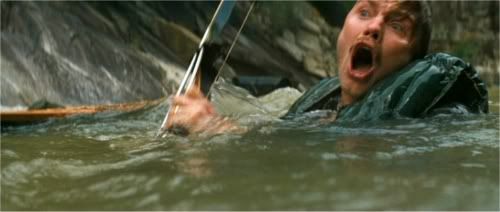
The review in "DVD Talk" is a rave:
... Hollywood just can't make films like Deliverance anymore; this type of recklessness is now reserved for independent filmmakers.
Rough and unflinching, Deliverance doesn't pull many punches and is still a fairly shocking story in retrospect. Dickey's imagination spawned this fictional tale of violation, murder and survival, but the visualization by Boorman and company raises the stakes even higher. The story starts off relaxed and deliberately paced, but the arc boils before the halfway point and refuses to let up for quite some time. It's as much about the aftermath of traumatic events as it is the events themselves, dragging our protagonists through the mud and watching their attempts to wash themselves clean. For these reasons and many more, Deliverance is much more than the sum of its parts: it's a taut, tense thriller that remains one of the decade's most visceral adventures.... (the full review)
Sunday, July 22, 2007
Not the Last Wolverine
Poet, naturalist and friend John Lane, having finished his most recent book, "Circling Home," about his house and its environs in Spartanburg, S.C., went to Alaska earlier this month. He and Betsy Teter, his wife and partner in many adventures, visited rivers, mountains and glaciers, and recorded some of their experiences on John's Web site: The Kudzu Telegraph.
On Friday the 13th, John wrote me a note: "We went up to Denali and stayed in a back country lodge a few days. We saw amazing animals -- caribou, grizzly, black bear, dhal sheep. I wanted to see a wolverine in a park so I could write a poem called 'My First Wolverine,' but no luck."
Then a couple of days later, at the Totum Inn, Valdez, where the owner has a passion for taxidermy (if not orthography), there the wolverine was: stuffed on top of display case.

Betsy told John that dead animals don't count, and of course she's right about that. But I think this dark setting, a little reminiscent of the Sheep Child's shelf in an Atlanta museum "where dust whirls up in the halls for no reason ... piling deep in a hellish mild corner," is just about perfect. Look at the caribou horns behind the snarling face, and the totem wings on the wall. In its way, this snapshot captures magnificently the spirit of James Dickey's "For the Last Wolverine," which was as much about the survival of the poet-beast as it was of the weasel god:
... How much the timid poem needs
The mindless explosion of your rage,
The glutton's internal fire the elk's
Heart in the belly, sprouting wings,
The pact of the "blind swallowing
Thing," with himself, to eat
The world, and not to be driven off it
Until it is gone, even if it takes
Forever. I take you as you are
And make of you what I will,
Skunk-bear, carcajou, bloodthirsty
Non-survivor.
Lord, let me die but not die
Out.
--
To view the original poems on line Atlantic Monthly subscribers can go to www.theatlantic.com.
The specific links are:
For the Last Wolverine, published in May 1966
and
The Sheep Child, published in August 1966
These two poems will also be among the first audio publications issued by the Digital Dickey project that John Lane has organized.
-- C.D., Paris, 22 July 2007
On Friday the 13th, John wrote me a note: "We went up to Denali and stayed in a back country lodge a few days. We saw amazing animals -- caribou, grizzly, black bear, dhal sheep. I wanted to see a wolverine in a park so I could write a poem called 'My First Wolverine,' but no luck."
Then a couple of days later, at the Totum Inn, Valdez, where the owner has a passion for taxidermy (if not orthography), there the wolverine was: stuffed on top of display case.

Betsy told John that dead animals don't count, and of course she's right about that. But I think this dark setting, a little reminiscent of the Sheep Child's shelf in an Atlanta museum "where dust whirls up in the halls for no reason ... piling deep in a hellish mild corner," is just about perfect. Look at the caribou horns behind the snarling face, and the totem wings on the wall. In its way, this snapshot captures magnificently the spirit of James Dickey's "For the Last Wolverine," which was as much about the survival of the poet-beast as it was of the weasel god:
... How much the timid poem needs
The mindless explosion of your rage,
The glutton's internal fire the elk's
Heart in the belly, sprouting wings,
The pact of the "blind swallowing
Thing," with himself, to eat
The world, and not to be driven off it
Until it is gone, even if it takes
Forever. I take you as you are
And make of you what I will,
Skunk-bear, carcajou, bloodthirsty
Non-survivor.
Lord, let me die but not die
Out.
--
To view the original poems on line Atlantic Monthly subscribers can go to www.theatlantic.com.
The specific links are:
For the Last Wolverine, published in May 1966
and
The Sheep Child, published in August 1966
These two poems will also be among the first audio publications issued by the Digital Dickey project that John Lane has organized.
-- C.D., Paris, 22 July 2007

Subscribe to:
Posts (Atom)